


 Schoolbags
 School supplies
 Figurines
 World of the house
 Choice of brands
Does your child have Golden on repeat and keep talking about Rumi, Mira and the Saja Boys? Discover the story behind...
Cart :
Shipping cost : 0,00 €
SALES: 5% immediate discount with the promo code: BBB
SALES: 5% immediate discount with the promo code: AAA
-
 SchoolbagsRolling Backpack For School
- Rolling Backpack Girl
- Rolling Backpack Boy
School Bag With Wheels- Wheeled School Bag Girl
- Wheeled School Bag Boy
School backpack- Backpack 1 compartment
- Backpack 2 compartments
Children's Schoolbag- Girl School Bag
- Boy School Bag
- Nursery School Bag
- School Bag Year 1
- Primary School Bag
Messenger bagSports bag- Girl Sports Bag
- Boy's Sports Bag
Pool bagLunch Bag- Girls' Lunch Bag
- Boys' Lunch Bag
Shopping bagPencil case- Kit 1 compartment
- Kit 2 compartments
- Kit garnished
A4 binder- A4 Girl Classer
- A4 Boy Classer
School calendarStationeryTrolley AloneSuitcase -
 School suppliesNotebooks
- Notebooks 24 cm x 32 cm
- Notebooks 21 cm x 29.7 cm (A4 format)
- Notebooks 17 cm x 22 cm
- Draft and writing notebooks
Correction and pencil cutters- Gums
- Proofreaders and erasers
- Pencil sharpeners
CalculatorsWriting- Ballpoint pens
- Fountain pens
- Roller pens
- Felt pens
- Highlighters
- Markers
- Pencils and pencils
- Cartridges and refills
Cutting and fastenings- Waterspouts and bedbugs
- Scissors and cutters
- Staplers and Perforator
Tracing- Menstruation
- Compass
Glue and adhesives- Glues
- Scotch
Filing cabinets and accessories- Dividers
- Punched pockets
- Filing cabinets small size
- 4-rings binders
- Lever binders
Diaries- School calendars
Copies, blocks and paper- squared paper sheets
- Seyès Ruled Exam Sheets
- Notepads and and paper
- Desk Memo Cubes and Post-it Notes
School packsView holders, shirts and sorters- Door-views
- Shirts
- Sorters
Labels and Stickers- Etiquettes
- Stickers
Good points boxesSlates, paintings and accessories- Slates and tables
- Markers and chalk
Drawing and music- Brushes, gouache, acrylic
- Paper, layer cardboard
- Colored pencils
- Music
- Felt
- Chalks
-
 FigurinesBetty Boop figuresStatuettes Betty BoopTiti FiguresCartoons figuresFigurines Leblon delienneFigurines Demons & MerveillesFigurines Michel AroutcheffGuillermo Forchino FiguresStatuettes Marilyn Monroe
 -
 World of the houseHouse linen
- Duvet cover
- Fitted sheet
- Polar Plaid
- Cushion cover
- Cushion
- Bath sheet
- Poncho
- Textile
Games - Toys- Toys
- Plush
Dishes- Mugs
- Bowls - Cups
- Glass
- Boxes
- Kitchen
Decoration- Metal plates
- Lamp
- Piggy bank
- Mirror
- Frames & photo frame
- Alarm clock
- Pendulum
- Bathroom
- Storage
- Door stickers
- Other decorations
Leather goods- Handbag
- Wallet
- Wallet
- Belt
- Umbrella
Accessories- Key ring
- Smoker
- Jewellery
- License watches
- Magnets
Gift by event- Birthday Gift
- Retreat Gift
- Valentine's Day Gift
- Mother's Day gift
- Father's Day gift
- Christmas gift
- Birth Gift
- Wedding Gift
- Original gifts
- Humorous gift
Gift vouchers -
 Choice of brands
Catégories de blogs
Rechercher dans blog
Derniers articles
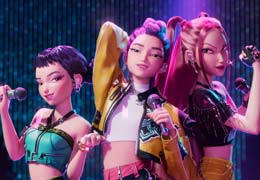
KPop Demon Hunters: The Story, Characters and Global Phenomenon
Read more

The 10 Best School Bags for Year 1 in 2026: Our Top Picks for a Great Start Read more
Choosing a school bag isn't easy. Size, weight, durability and children's favourite designs all matter. We've...
Which schoolbag to choose according to age and class? The ultimate guide Read more
Check out our comprehensive guide to choosing the perfect backpack for your child!
Stuffed Animals Les Déglingos: Why Do Children Love Them (and Parents Too)? Read more
Funny animals, soft textures, comforting colors: discover why Les Déglingos stuffed animals are so popular with...
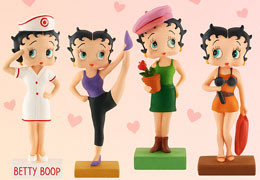
Mother's Day: give a Betty Boop figurine, the original gift that makes all moms fall in love! Read more
Looking for an original gift for Mother's Day? Discover how the charming and characterful Betty Boop figures can...
Articles populaires
Choosing the right size of your schoolbag: complete guide!
Tired of being fooled by the visual of the schoolbag in favor of the right size? Yes, but at the same time, no one...
Read more
Who is Stitch? Experience the endearing Disney character like you've never seen him before!
Are you intrigued by the endearing blue creature named Stitch that your child keeps talking about? Discover the story...
Read more
Paw Patrol Heroes: Names, Powers, and Secrets Revealed!
Who are the PAW Patrol characters? What are their roles and secrets? Find out all about these fearless puppies and...
Read more
Discover the incredible story of Spiderman!
Discover the incredible story of Spider Man! His origins and adventures will soon have no secrets for you. We tell...
Read more
The history of the Kipling brand or how the monkey became king of leather goods
Kipling: much more than just a bag! Discover the astonishing rise of this Belgian brand that has made a monkey the...
Read moreArticles en vedette
KPop Demon Hunters: The Story, Characters and Global Phenomenon
Does your child have Golden on repeat and keep talking about Rumi, Mira and the Saja Boys? Discover the story behind...
Read more The 10 Best School Bags for Year 1 in 2026: Our Top Picks for a Great Start
Choosing a school bag isn't easy. Size, weight, durability and children's favourite designs all matter. We've...
Read more Which schoolbag to choose according to age and class? The ultimate guide
Check out our comprehensive guide to choosing the perfect backpack for your child!
Read more
Top 5 bed linen for girls!
Your little girl's room doesn't really reflect her personality... It's time to fix it! The quick and easy trick to...
Read more Stuffed Animals Les Déglingos: Why Do Children Love Them (and Parents Too)?
Funny animals, soft textures, comforting colors: discover why Les Déglingos stuffed animals are so popular with...
Read more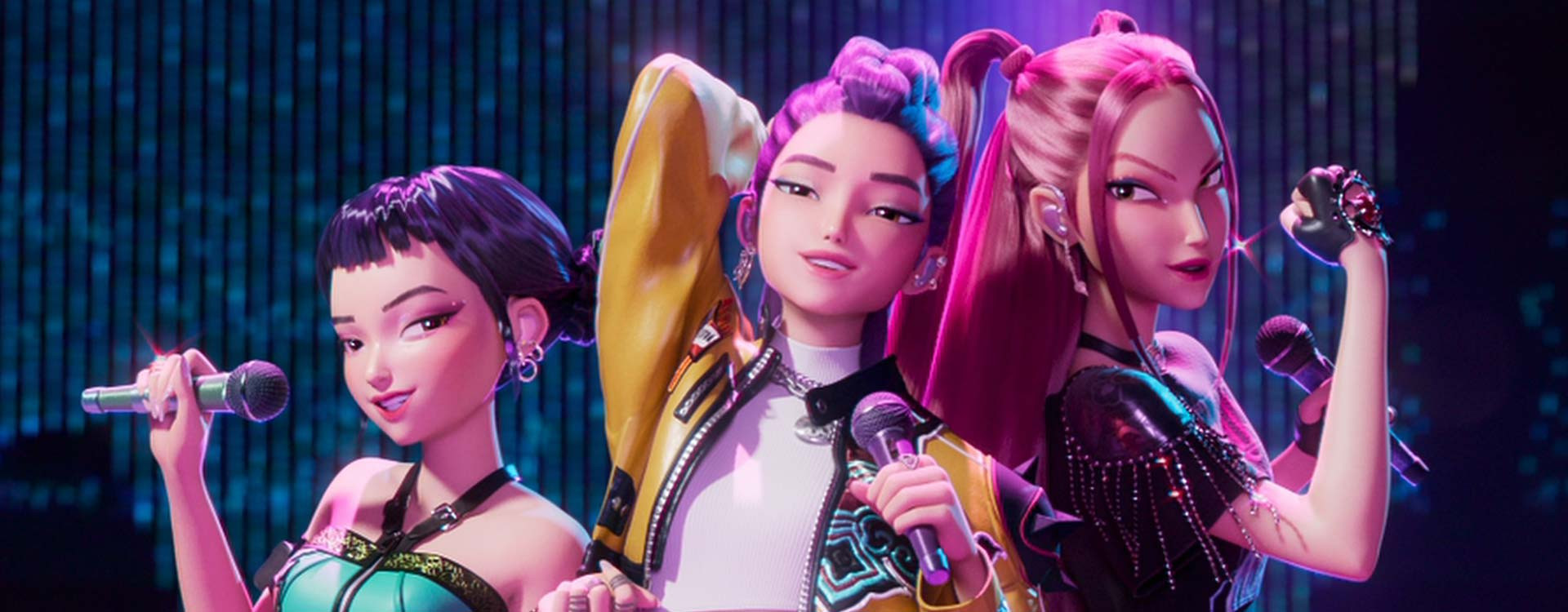
KPop Demon Hunters: The Story, Characters and Global Phenomenon
Your child sings Golden on repeat, tells you about Rumi, Mira and Zoey or asks you if the Saja Boys are real demons? You may have discovered KPop Demon Hunters through him, without knowing exactly what this Netflix animated film is about. Why does it fascinate him so much? Is it adapted to his age? And how have his songs conquered the music charts as well as the playgrounds ?
On paper, the starting point is unexpected: Rumi, Mira and Zoey form HUNTR/X, a K-pop group whose members secretly lead a second life as demon hunters. But behind the fights, the humor and the catchy choruses is a story about difference, shame, friendship and the fear of disappointing those you love.
The film also draws on Korean culture. The heroines' weapons, the tiger Derpy, the costumes and some of the sets refer to traditions that Western viewers do not always recognize at first glance. In a few minutes, you will discover the story and characters of KPop Demon Hunters, understand what your child loves about this universe and why the movie has become a global phenomenon.
What exactly is KPop Demon Hunters ?
K-pop stars who hunt demons
Released on Netflix on June 20, 2025, KPop Demon Hunters is an animated film produced by Sony Pictures Animation and directed by Maggie Kang and Chris Appelhans. It puts Korean culture at the heart of a universe where music, traditions and the supernatural meet.
Rumi, Mira and Zoey form HUNTR/X, a world-famous K-pop trio. Behind the concerts and choreographies lies another identity: the three singers are also demon hunters responsible for protecting humanity.
Their mission is to strengthen the Honmoon, a magical barrier that protects the world from humans. Their most original weapon is their voice: the energy created between HUNTR/X and its audience directly feeds this protection. So music is not just used to place songs in the film. It brings humans together and becomes, in a literal sense, a force against demonic forces.
K-pop meets comedy, action and fantasy
The film goes from a concert to a supernatural confrontation in a matter of seconds, without losing its coherence. K-pop is the most visible part of it, but the story also draws on much older beliefs, traditions and symbols.
✨ It is this mix of current popular culture and Korean heritage that gives KPop Demon Hunters its identity.
How did KPop Demon Hunters come about ?
Seven years to bring the film to life
The project was born from an idea that is easy to summarize: what if K-pop stars secretly led a second life as demon hunters? Nearly seven years of development were then necessary to build the characters, the mythology and the rules of this universe.Over the course of writing, the fantasy adventure also became a story about identity, difference and self-acceptance.
Born in Seoul and raised in Canada, Maggie Kang wanted to create the great Korean animated film she would have loved to see as a child. Korea was not to be just a backdrop: its music, history, clothing and beliefs were to feed into every part of the story.
This ambition is rooted in her childhood. Her mother taught her the history of Korea at home, lessons that the young Maggie sometimes followed without much enthusiasm. Today, the director measures how much this teaching nourished her link with her origins and her pride in Korean culture.
"Am I Korean enough to tell this story?"
As the project grew, Maggie Kang realized the responsibility that lay ahead of her: to create the first Hollywood film that was fully rooted in Korean culture and to represent it to a global audience. She wondered if she was the right person to do it and if she was the right person to do it. "Korean enough" — "Korean enough" — to tell this story.
Her father reminded her that her role as a director was not to speak on behalf of an entire culture, but to tell her own story, nourished by both her Korean and North American experiences. Maggie Kang explains that this conversation freed her from her doubts.
✨ This personal questioning echoes the journey of several characters: Rumi fears that her true nature will prevent her from being accepted, while Zoey, raised in the United States, also seeks her place between several influences.
A production bringing together more than 1,000 people
An international team of hundreds of artists and technicians participated in the creation of the film.To build its visual identity, the team was inspired by the lighting effects of concerts, the energy of K-pop music videos, editorial photography, but also K-dramas and Japanese animation. This mix is particularly noticeable in the show scenes, designed with the care and dynamism of real musical performances.
Did you know ?
Between 200 and 300 costume sketches were made during production. Rumi appears in 23 different outfits, while several dozen hairstyles were tested before finding Jinu's. These figures show the attention given to characters who had to be believable both on a K-pop stage and in a fantasy animated universe.
What is the story of KPop Demon Hunters ?
Be careful, the next section reveals several important elements of the story.
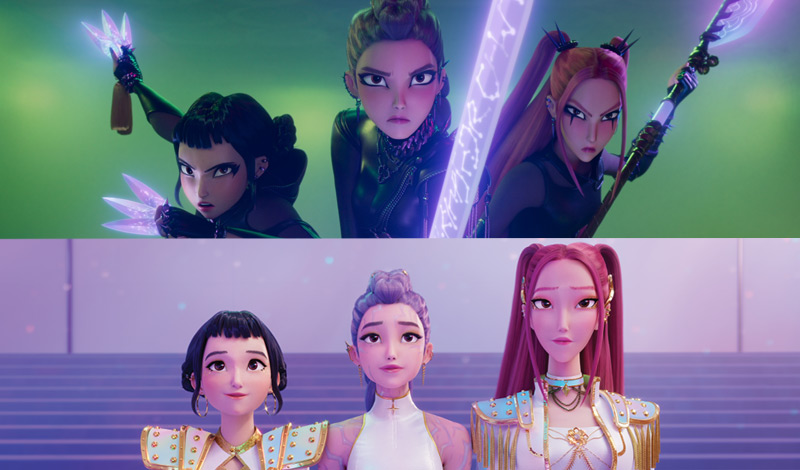
HUNTR/X: singers in front of the fans, hunters in the shadows
Rumi, Mira and Zoey are not the first demon hunters in history. For several generations, trios of warriors have used their voices to protect humans. At the time the film takes place, this secret mission falls to the three members of HUNTR/X, who have become global K-pop stars at the same time.
Each concert reinforces the Honmoon, the barrier that separates the world of humans from that of demons. The ambition of the three singers is to make it one day entirely golden in order to permanently prevent creatures from crossing this border.
Their songs, the energy of their fans and the bond between them are their most powerful weapon. But just when they seem to be on the verge of achieving their goal, Rumi's voice mysteriously begins to fail her.
When the Saja Boys seduce HUNTR/X fans
In the world of demons, this progression worries Gwi-Ma. This fearsome lord feeds on human souls and seeks to weaken the Honmoon to expand his power. One of his servants, Jinu, then comes up with a particularly clever strategy: rather than directly confronting HUNTR/X, why not divert the attention and affection of his audience ?
Jinu thus takes the lead of the Saja Boys, a group made up of five demons hidden under the guise of seductive K-pop stars. With their impeccable choreography, their carefully studied look and their Soda Pop song, the newcomers quickly win over some of the HUNTR/X fans.
The battle is no longer fought with weapons alone. It also takes place on stage, in the music charts and even in the hearts of the audience. As the Saja Boys grow in popularity, they can steal more souls and weaken the protective barrier.
The secret that Rumi can no longer hide
Rumi hides a heavy secret: her mother was a hunter, but her father was a demon. Supernatural marks have appeared on her skin since childhood. She hides them, convinced that this part of herself must disappear in order for it to be accepted.
When his marks progress and his voice breaks, the secret becomes difficult to hide from Mira and Zoey. Rumi finds unexpected understanding in Jinu. He, too, has a shameful past: once human, he made a deal with Gwi-Ma to escape misery and achieve success.
The rapprochement between Rumi and Jinu blurs the line between hunters and demons. At the same time, Rumi's lies damage the trust within HUNTR/X. The fight becomes intimate: she can only protect others after she stops treating a part of herself like a monster.
Rumi, Mira and Zoey: three heroines, three ways to find your place
Rumi: Can you be loved when you hide a part of yourself ?
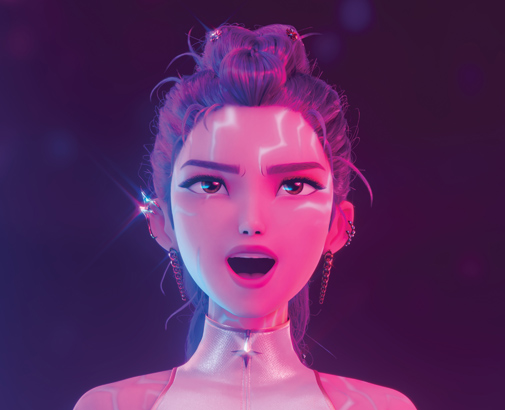
As the leader and lead singer of HUNTR/X, Rumi seems to be completely dedicated to her mission. She wants to make the Honmoon golden and prove herself worthy of her mother's line of hunters. However, this determination hides an old fear: that her demonic nature will rob her of her place and the love of her friends.
Her marks are therefore not only a danger. They materialize what she believes she must erase in order to be irreproachable. The more she tries to hide them, the more shame isolates her from Mira and Zoey. Her journey is not to become perfect, but to understand that she does not need to mutilate her identity to deserve to be loved.
Mira: behind the confidence, the fear of not deserving one's place
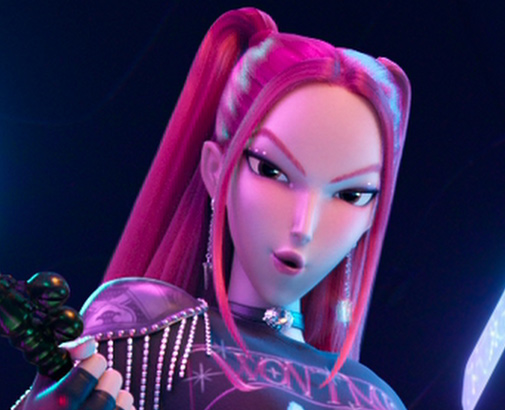
With her outspokenness, sarcasm and combative temperament, Mira can easily appear as the "strong girl" of the group. However, this confidence is also a form of protection. Mira has long felt that she was the black sheep of her family and that she did not fit the place that others would have liked to give her.
HUNTR/X is a chosen family for Mira. Her high standards reflect both her desire to succeed and her fear of losing this new place. The film thus avoids reducing her to the fighter of the trio: her strength and humour coexist with a real need for recognition.
Zoey: between two cultures and two belongings
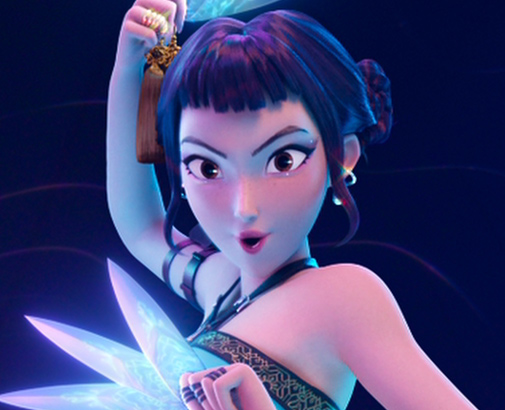
Born and raised in the United States in a Korean family, Zoey experiences another form of disconnect. She grows up between two cultures without always feeling like she belongs entirely to one or the other. This position can feed the fear of never being "enough" Korean in one context, or American enough in another.
The youngest member of the trio often seeks to preserve harmony and make herself indispensable. Her journey echoes, cautiously, the question that Maggie Kang asked herself about her legitimacy to tell a Korean story.
Why can children easily recognize themselves in one of the three heroines?
Each heroine offers a different entry point: Rumi fears that she will no longer be loved if her true nature is discovered; Mira wants to prove her worth; Zoey tries to find out where she belongs. This is a reading of the film, but it helps to understand why very different children can recognize themselves in the same trio.
They don't have to be idols or fight demons to know these emotions. Hiding a difference, wanting to be chosen by their classmates or feeling like they never fit perfectly into a box is already part of their daily life.
The creators refused to give the three heroines a fixed color code that would have made them resemble, according to their own comparison, the Power Rangers.Rumi, Mira and Zoey were not to be reduced to "the pink girl", "the blue girl" and "the yellow girl". Their outfits change, as do their emotions and contradictions: each one can be strong at one time, vulnerable at another, and sometimes both at the same time.
Jinu and the Saja Boys: why are the "bad guys" so attractive ?
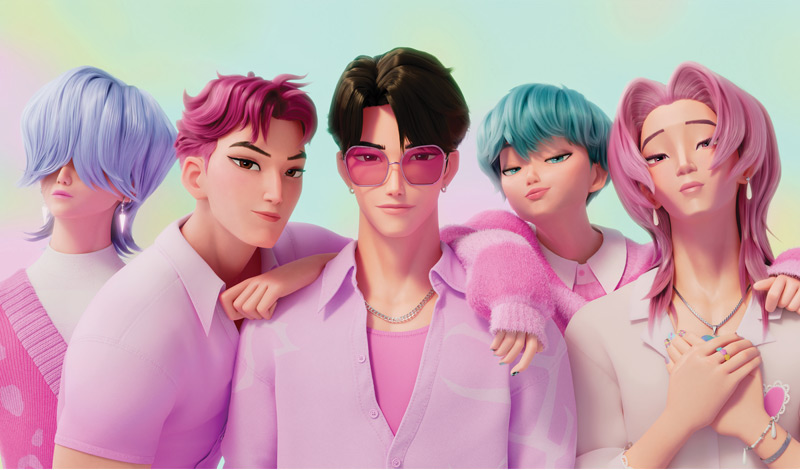
Jinu, an adversary who bears an uncanny resemblance to Rumi
Under his appearance as an unattainable star, Jinu hides a much less glorious past. Several centuries ago, at the time of the Joseon Dynasty, he was a poor young man dreaming of escaping poverty. Gwi-Ma then promises him the success and recognition he believes he has been deprived of. Jinu accepts his deal, abandons his family and ends up losing his soul to become a demon in his service.
This decision brings him what he wanted, but condemns him to live with the guilt of having abandoned his mother and little sister. Gwi-Ma maintains this suffering and uses the memories of his former life to maintain her hold on him. In exchange for the success of his plan against HUNTR/X, Jinu hopes to obtain the permanent erasure of this memory that has become unbearable.
Shame brings Jinu closer to Rumi, without erasing what separates them. Rumi did not choose his dual nature; Jinu must answer for a decision that hurt his family. The film makes him an adversary capable of remorse, but his past is not enough to exonerate him.
When danger takes on the appearance of a perfect boy band
To weaken HUNTR/X, Jinu understands that it is more effective to win over his fans than to confront him directly. The Saja Boys are thus conceived as an irresistible boy band: seductive faces, impeccable clothes, carefully calculated attitudes and perfectly synchronized choreography. Each member even takes up a familiar K-pop archetype, from the mysterious leader to the youngest member with an innocent appearance.
Their visual universe contributes to this seduction. The film's artists deliberately discarded the traditional infernal red, considered too expected, in favor of a brighter and more attractive magenta energy. Thus, the demonic world does not immediately present itself as dark, repulsive or threatening.
✨ In KPop Demon Hunters, the danger can instead be seductive, popular and perfectly choreographed. This is one of the most mischievous ideas in the film.
Tigers, shamans, sacred weapons... Korean references that we don't necessarily see
Derpy and Sussie: two funny animals, but not only
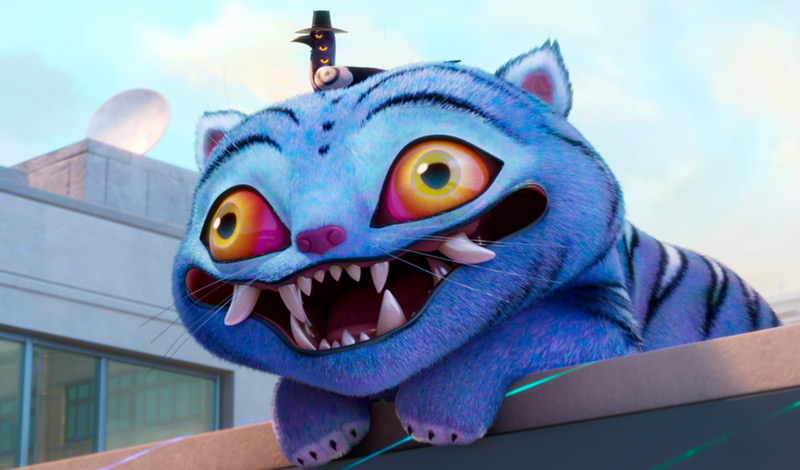
With his large eyes and clumsy demeanor, Derpy first looks like a comical animal. This blue tiger and Sussie, the magpie that accompanies him, come from a true Korean artistic tradition.
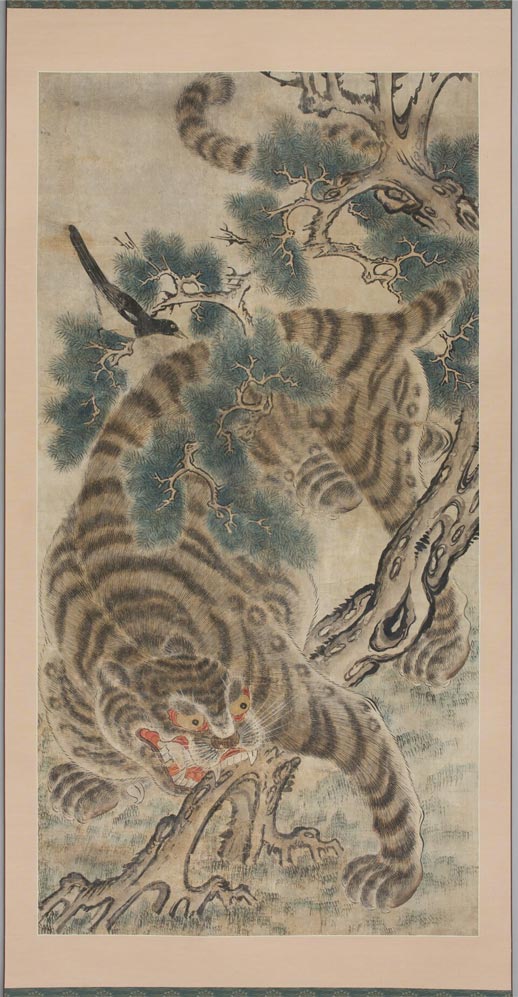
The duo is inspired by jakhodo, a popular genre of minhwa painting combining a tiger and a magpie.The first is associated with protection against evil spirits; the second announces good news. In these works, the feline often appears in naïve or clumsy features. Derpy thus takes up this figure of the "simpleton tiger" from Korean pictorial folklore.
"Saja Boys": a much darker name than it seems
To a Western viewer, "Saja Boys" sounds like the effective name of a K-pop group. In Korean, however, it contains a disturbing play on words. The term jeoseung-saja refers to the messengers from the afterlife who are responsible for seeking the dead and leading their souls to the other world.
This play on words extends into the appearance of the group. In popular culture, jeoseung-saja are often depicted dressed in black and with hair a large hat reminiscent of the GAT, a traditional headgear from the Joseon Dynasty.
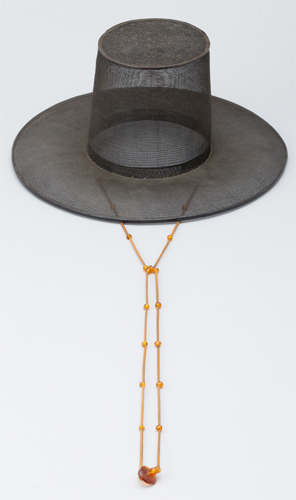
For the Korean public, this silhouette is therefore a strong visual clue: behind their appearance as seductive idols, the Saja Boys already reveal their link with death.
HUNTR/X: modern idols that echo a very ancient tradition
The link between music and spiritual protection reminds us The gut, a Korean shamanic ritual led by a mudang. Song, dance and music put humans in touch with the spiritual world.
HUNTR/X's concerts do not literally reproduce this ritual, but the closeness helps to understand the protective role of the singers.
Fantastic weapons drawn from Korean tradition
The weapons extend this encounter between modern spectacle and ancient heritage. Rumi's sword evokes the Saingeom, a protective ritual weapon sometimes called the "sword of the four tigers". Zoey's blades echo shamanic knives; Mira's curved weapon takes the form of Korean ceremonial weapons.
Norigae, Irworobongdo... these details that tell the story of Korea
Several details also draw on Korean culture.
The ribbons hanging from the sacred tree are resuming The five traditional colours of theobangsaek : blue, red, yellow, white and black which would have the virtue of warding off misfortune.
,-Cor%C3%A9e,-dynastie-Joseon,-d%C3%A9but-du-XXe-si%C3%A8cle.jpg)
The heroines wear norigae, decorative ornaments usually hung from the hanbok, the traditional Korean garment.
And during the song Golden, theIrworobongdo appears behind HUNTR/X: this landscape depicting the sun, the moon and five mountains once adorned the screen behind the royal throne.
Seoul itself was rebuilt from its true topography. Bukchon, Namsan, Naksan, Myeong-dong and the COEX rub shoulders with old references.
KPop Demon Hunters' Korea is therefore neither an exotic setting nor a collection of randomly placed symbols: it constitutes the backbone of its entire universe.
What KPop Demon Hunters Really Tells Kids
Shame grows when you hide a part of yourself
Maggie Kang and Chris Appelhans have explained that creatures can give visible form to our "inner demons." In Rumi, it is shame that gnaws at her. She doesn't just hide her true nature: she comes to believe that it makes her unworthy of love. This feeling isolates her and allows Gwi-Ma to exploit her fears.
Perfection is not a condition for being loved
Rumi makes it her duty to protect humanity and complete the Golden Honmoon without ever faltering. Mira, too, believes that she must constantly prove her worth to deserve her place. Both of them live with the idea that they must be beyond reproach.
The film visually translates this search for perfection: the uniform gold pursued by Rumi is finally succeeded by an iridescent Honmoon, whose multiple colors can symbolize the acceptance of all facets of oneself.
Secrets can weaken even the strongest friendships
Self-acceptance does not erase the consequences of a lie. By hiding her secret, Rumi prevents Mira and Zoey from helping her and breaks their trust. Their friendship only becomes solid when it can accommodate their frailties as well as their successes.
Profound subjects, but accessible to children
During production, Maggie Kang worried that the shame, negative thoughts, and conflicts between friends would be too complex for the younger ones. During the first screenings, however, young girls identified these emotions and linked them to their own lives. These reactions convinced the directors to keep all the depth of these themes.
✨ Children don't always know how to explain the symbolism of the film, but they understand its emotions.
Is KPop Demon Hunters kid friendly ?
Demons, fights and transformations: what the film really shows
Despite its bright colors, the film has many action scenes. The heroines fight with swords and blades, the demons want to steal human souls and several sequences evoke death or sacrifice.
However, the violence remains stylized: no blood or realistic wounds. The clashes look more like superhero fights to the rhythm of music than scenes designed to make the viewer uncomfortable.
Scenes that can impress the youngest
Sensitive children may be more impressed by the atmosphere than by the fights themselves.
Gwi-Ma appears as a huge demonic face surrounded by flames, with a menacing voice.
Rumi's marks progress over his body, the Saja Boys reveal their supernatural appearance, and entire crowds are sometimes hypnotized or deprived of their souls.
Shame, rejection and fear of losing loved ones can also raise questions.
However, the humor, the songs and the solidarity between the heroines prevent the story from remaining in a dark register.
Demons far from the Western imagination
The word "demon" can naturally worry some parents.
In the film, however, it does not refer to the devil of the Christian tradition, but to fantastic creatures who steal souls and obey Gwi-Ma. Their appearance borrows in part from Korean folklore, especially the dokkaebi and traditional masks.
Gwi-Ma remains an evil and threatening character, but the film is more in the register of a fantastic adventure than a religious story.
The recommended age to watch KPop Demon Hunters
Ratings vary by country. As of September 17, 2026, Netflix has 7+ in France. In the United States and the United Kingdom, the film is rated PG, for Parental Guidance : it can be seen by children, but the vigilance of parents is recommended due to some action scenes, disturbing images and more sensitive themes.
In fact, the film KPop Demon Hunters becomes accessible around 8 years old. A 7-year-old child used to fantastic adventures will be able to watch it with an adult. On the other hand, a child sensitive to menacing faces, transformations or demon stories may prefer to wait. His usual relationship with action films remains more meaningful than an age set to the nearest month.
Why do kids get completely addicted to songs ?
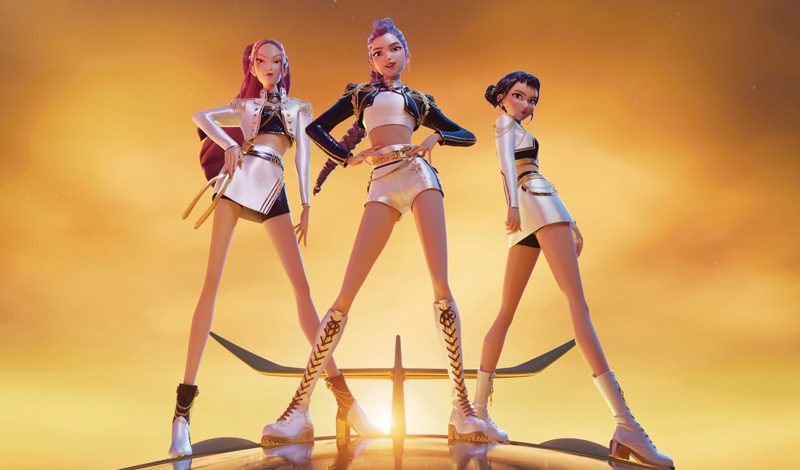
Songs designed as real K-pop hits
From the start, The soundtrack had to meet a double objective: to advance the story and to offer songs capable of existing outside the film. The script team ensured that each track played a role in the narrative, while THEBLACKLABEL's producers, accustomed to contemporary K-pop, sought to create musically believable tracks.
How It's Done served as a test track: the song was supposed to introduce the heroines while giving the beginning of the film the energy of a real concert. This double ambition explains why the songs work independently of the film and naturally find their place in playlists.
Golden : a song thought out down to the smallest detail
Even before the composition of Golden, the team wrote seven pages to define what the song should tell and feel: express the trio's dreams, explain the Golden Honmoon and hint at Rumi's secret, while remaining credible as a K-pop track outside of the film.
Five or six versions were necessary before arriving at the final piece. Golden was one of the last songs on the soundtrack to be validated.
Golden : a spectacular refrain that makes you want to take up the challenge
If your child struggles to reach the highest grades of Golden — and yet, he puts all his heart into it! — reassure him: The song was conceived as a real vocal challenge. It reaches a particularly high A, denoted A5.
This difficulty also serves the story: the notes become almost inaccessible when Rumi's secret begins to suffocate him. The song thus makes heard what the character can no longer say.
Soda Pop: a melody designed to stay in the top
The heady nature of Soda Pop owes nothing to chance. Danny Chung, co-writer of the song and the singing voice of Baby Saja, explains that it had to be "A Little Retro […] cheesy by design—an earworm and 'annoyingly addictive'". In other words: "a little retro, deliberately kitsch, heady and almost annoying because it is so addictive". If you hum it after hearing it twenty times in your child's room, the goal is achieved.
Under its sweet melody, Soda Pop The Saja Boys sing of their desire to "devour" their audience: an image that seems romantic, but which becomes much less innocent when you know that they really feed on the souls of their fans. The song thus uses the same trap as the band: it seduces first, before revealing what it hides.
How did a Netflix movie become a global phenomenon ?
The music extends the success of the film
When he was released, KPop Demon Hunters was not based on any known franchise. The film first found its audience on Netflix, and then its songs began circulating independently on music platforms and social media.
This snowball effect has carried simultaneously Golden, , Your Idol, , Soda Pop and How It's Done in the Top 10 of the Billboard Hot 100, a first for a film soundtrack. Some listeners discovered HUNTR/X and the Saja Boys in a playlist even before seeing the film.
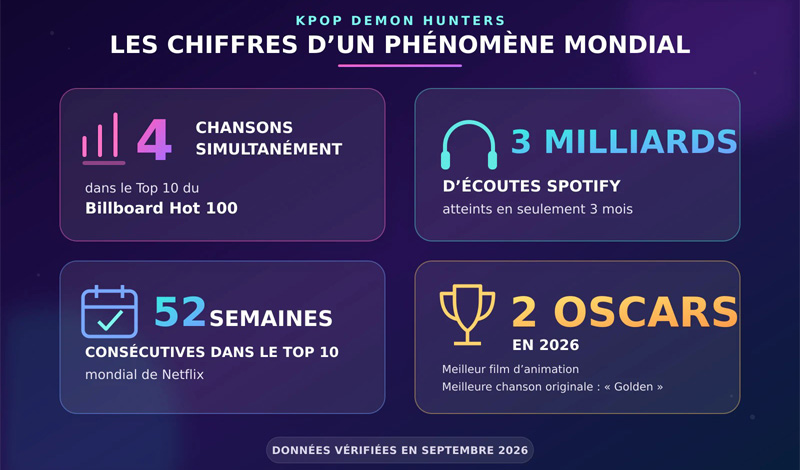
Golden becomes a global hit
In a few months, Golden went well beyond the scope of the film. The track settled at number one on the Billboard Hot 100 and stayed there for eight weeks. Never before had a K-pop song performed by a girl group reached the top of this chart.
This popular success was then accompanied by recognition from the music industry. In February 2026, Golden won the Grammy Award for Best Song Written for Visual Media, becoming the first K-pop track to win an award in this category.
A Netflix success that lasts
The film's success did not run out of steam after a few weeks. In September 2026, KPop Demon Hunters has exceeded 500 million views according to Netflix and remains the most watched film in the history of the platform.
Record: 52 weeks, or 1 whole year of presence in Netflix's global top 10!
More than a year after its release, it is still regularly in the Top 10 worldwide, driven in particular by songs that continue to attract new families.
From music charts to big awards
The success of KPop Demon Hunters was not limited to ratings and music charts. On March 15, 2026, the film won the two Oscars for which it was nominated: Best Animated Feature and Best Original Song for Golden.
The popular phenomenon has thus obtained one of the most important recognitions in the film industry.
From the screen to the playground
The phenomenon can also be measured in the daily lives of children. They take over the choreographies, sing the choruses and choose their favorite heroine. Rumi, Mira and Zoey now appear on toys, clothes, school bags and lots of Kpop Demon Hunters school supplies.
Kpop Demon Hunters has thus gone beyond the frame of the screen to become a universe that children extend in their games and conversations.
To go further: discover How to choose a children's schoolbag or a KPop Demon Hunters backpack suitable for school.
KPop Demon Hunters 2: what do we really know about the sequel ?
Yes, a sequel to KPop Demon Hunters is officially confirmed
On March 12, 2026, Netflix officially announced the start of work on a sequel to KPop Demon Hunters. Maggie Kang and Chris Appelhans will return to direct, again in partnership with Sony Pictures Animation. However, the plot, cast and release date have not yet been revealed. Even the title KPop Demon Hunters 2, commonly used to talk about the project, is not yet official.
A world tour is also in the works
Netflix and AEG Presents have also announced an official world tour dedicated to KPop Demon Hunters. As of September 17, 2026, the cities, dates and artists on stage have not yet been revealed. The participation of EJAE, Audrey Nuna and REI AMI — the respective singing voices of Rumi, Mira and Zoey — is therefore not confirmed to date.
Beware of announcements and unofficial dates
Tribute concerts already cover songs from the film without being linked to Netflix. Before buying tickets, check that the event is presented as the official tour organized by Netflix and AEG Presents. In the absence of dates published by these two partners, any announcement already giving a city, venue or distribution should be considered with caution.
Information verified and updated on September 17, 2026.
Finally, why does your child love KPop Demon Hunters so much ?
What seduces at first is easy to identify: catchy songs, bright colors, spectacular fights and three heroines capable of filling a stadium before facing demons. The film KPop Demon Hunters has everything it takes to capture children's attention immediately.
But if they want to come back, it's also because Rumi, Mira and Zoey are not invincible. They doubt, fear disappointing their loved ones and look for their place. Their adventures are fantastic, but the emotions they go through are familiar.
Behind the show is also a tested friendship, a Korean culture present in every detail and a simple message: hiding a part of yourself does not make you stronger. It is by accepting who they are and trusting each other that the heroines manage to move forward.
Your child probably won't put all these words into words about how he feels. He might just say that Rumi is "too strong," that Derpy makes him laugh, or that Golden is his favorite song. But now you know what's behind that enthusiasm — and you might be able to talk to him about it the next time the music is playing in the car.
FAQs: Questions parents have about KPop Demon Hunters
Is KPop Demon Hunters Korean, American, or Japanese ?
KPop Demon Hunters is an American animated film produced by Sony Pictures Animation and distributed by Netflix. Its story, imagined by Korean-Canadian director Maggie Kang, takes place in Seoul and draws heavily on K-pop, folklore and Korean traditions. It is therefore not a Japanese anime.
Who are Rumi, Mira and Zoey ?
Rumi, Mira and Zoey are the three heroines of KPop Demon Hunters. They form HUNTR/X, a fictional K-pop group whose members use their voices and fighting skills to protect humans from demons.
Do the singers of HUNTR/X really exist ?
HUNTR/X does not exist as a real K-pop group, but the songs are well performed by three artists: EJAE sings for Rumi, Audrey Nuna for Mira and REI AMI for Zoey. In the French version, the singing parts are performed by Alexiane Broque for Rumi, Jeanne Jerosme for Mira and Clotilde Verry for Zoey.
Do the Saja Boys really exist ?
The Saja Boys do not exist as a real K-pop group: they were created for the film. In the original version, their songs are performed by Andrew Choi, Neckwav, Danny Chung, Kevin Woo and Samuil Lee. Andrew Choi sings for Jinu, whose spoken voice is provided by Ahn Hyo-seop. In the French version, Jinu is performed by Alexandre Nguyen for the dialogues and by Doryan Ben for the songs.
What does "Saja" mean ?
In the Korean expression jeoseung-saja, , saja refers to a messenger from the afterlife responsible for guiding the souls of the dead. The name "Saja Boys" thus discreetly evokes the group's link with death.
Is KPop Demon Hunters suitable for kids ?
For most children, yes. Netflix ranks the film 7+ in France. It contains stylized fights, transformations and some impressive images, but no bloody violence. 8 years old is a reasonable benchmark, to be adapted according to the child's sensitivity and his habit of fantastic adventures.
Will there be KPop Demon Hunters 2 ?
Yes. The sequel was confirmed on March 12, 2026 with Maggie Kang and Chris Appelhans returning to direct. No release date has been officially announced. The year 2029 is regularly mentioned, but it has not been confirmed by Netflix
Information verified and updated on September 17, 2026.
Main sources
This article is mainly based on interviews with the film's creators, official Netflix publications, and resources dedicated to Korean culture. Data on awards and upcoming projects have been verified with relevant organizations and partners. Sources consulted and information updated as of September 2026.
Creation of the film and characters
- Netflix Tudum — KPop Demon Hunters: Character and Cast Guide
- Korea.net — Interview with Maggie Kang, creator and co-director of KPop Demon Hunters
- Animation Magazine — Interview with Maggie Kang and Chris Appelhans about the creation and visual identity of the film
- Netflix Tudum — The Meaning of Colors in KPop Demon Hunters
- Entertainment Weekly — Maggie Kang looks back at the origins of the project and the integration of K-pop
Korean culture and references
- VISITKOREA — The places, traditions and cultural references of KPop Demon Hunters
- KORELIMITED — Jakhodo and the traditional symbolism of the tiger and the magpie
Global Success and Awards
- TIME — How KPop Demon Hunters Became a Global Phenomenon
- CNews — Grammy Awards 2026: Golden gives K-pop its first-ever Grammy Award
- Netflix Tudum — KPop Demon Hunters Nominations and Awards
- Academy of Motion Picture Arts and Sciences — Official winners of the 2026 Oscars
Continuation and official announcements
Posted in: News
Related products
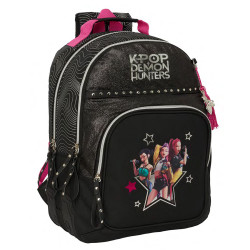
KPOP Demon Hunters Energy Backpack 42 CM - 2 Cpt
Old price: 52,90 € Price: 42,50 € Discount: 20% Save up: -10,40 €
High-end quality Officially licensed KPOP Demon Hunters 2 zipped...
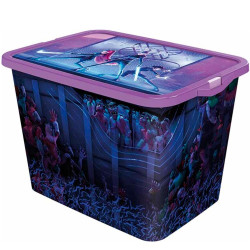
Demon Hunters Kpop Storage Box 23 Liters
Old price: 19,90 € Price: 16,90 € Discount: 15% Save up: -3,00 €
Capacity: 23 liters Ideal for your child to store their toys in a box with...
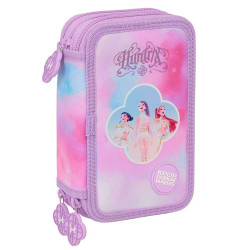
KPOP Demon Hunters Artist Filled Pencil Case 20 cm - 3 Compartments - 37 Pieces
Old price: 29,90 € Price: 25,90 € Discount: 13% Save up: -4,00 €
Officially licensed KPOP Demon Hunters High-end quality "Artist" Collection 3...
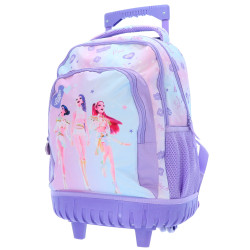
Rolling backpack for school KPop Demon Hunters Love 43 CM 2 Cpt
Old price: 69,90 € Price: 59,90 € Discount: 14% Save up: -10,00 €
High-end quality 2 zip compartments + 1 zip pocket + 2 side pockets...
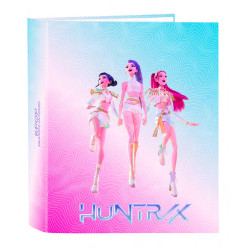
KPOP Demon Hunters A4 Binder 33 cm
Old price: 8,90 € Price: 7,90 € Discount: 11% Save up: -1,00 €
Officially licensed KPOP Demon Hunters Superior quality A4 size 4 Rings...
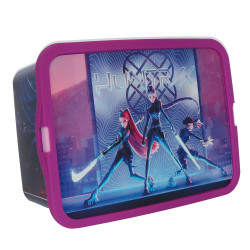
Demon Hunter Kpop Storage Box 13 Liters
Old price: 16,90 € Price: 13,90 € Discount: 18% Save up: -3,00 €
Capacity: 13 liters Ideal for storing your child's toys in a box with their...
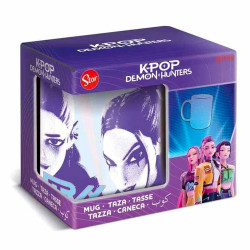
Demon Hunter Kpop Mug 350 ML Ceramic
Old price: 9,90 € Price: 7,90 € Discount: 20% Save up: -2,00 €
Ceramic mug Capacity 350 ml (35 cl)
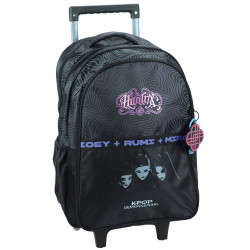
Rolling backpack for school KPOP Demon Hunters Zoey Rumi Mira 46 CM - Premium Trolley
Old price: 59,90 € Price: 39,90 € Discount: 33% Save up: -20,00 €
High-quality trolley bag 2 zip compartments 1 front zip pocket Side pockets...
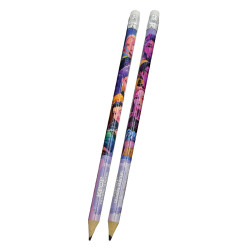
KPop Demon Hunters Pencil with Eraser
Price: 0,99 €
Official pencil KPOP Demon Hunters Built-in rubber at the end Suitable for...
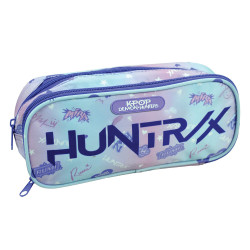
KPop Demon Hunters Purple Idols Pencil Case 23 CM - 2 Compartments
Old price: 9,90 € Price: 8,90 € Discount: 10% Save up: -1,00 €
Officially licensed KPOP Demon Hunters Collection Purple Idols Superior...
Related posts
 Back-to-school allowance paid on August 20, 2019
The back-to-school allowance is a real boost of cash for many households in France, here are the ways to benefit from...
Read more 3 activities to do with your family in DecemberFamily activity is a real time of sharing and discovery, this activity is very important for the development of our...
Read more School supplies: what's new in our children's school bags?Every year, for the start of the school year, new school supplies appear according to the trends of the moment....
Read more Covid 19: should school business be disinfected and with what?In order to reassure parents but also to ensure optimal safety, many means have been put in place in schools to...
Read more Gift ideas: shopping list Christmas 100% deco trendWhy don't you give it a decorative gift? Our specialists guide you to find the trendy object that will make a mark on...
Read more
Leave a comment